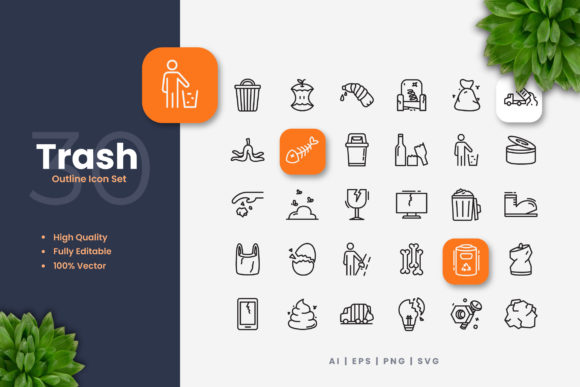
Trash Icons: A Versatile Graphic Design Asset for Digital Sellers
As a digital product creator who regularly tests graphic design assets before launching them on Etsy, Creative Fabrica, or Shopify, I always start with a clear goal: Does this asset fit the needs of my target audience and align with the commercial products I’m planning to sell? Trash Icons immediately caught my attention as a simple and clean icon design that promises versatility across multiple platforms. Let’s break down how it could work for your online shop.
First Impressions: Trash Icons’ Visual Personality
Trash Icons has a minimalist feel that leans toward modern and functional design. The icons are straightforward, with clean lines and consistent stroke weights. This makes them feel professional and adaptable. The style is not overly playful or cute, which means it appeals more to niche audiences like tech startups, educational content creators, or small businesses looking for brand identity tools rather than children's product designers or crafters focused on whimsical themes.
The mood is neutral—something that can easily be styled to match different branding directions. Whether you're creating social media graphics, infographics, or website UI elements, these icons offer a solid foundation without being too specific in their visual language.
Real-World Applications: How Trash Icons Can Be Used in Commercial Products
Trash Icons can be integrated into a wide range of printable designs and digital products. Here are some practical examples:
- SVG Products: These icons work well as part of SVG-based clipart bundles or sublimation designs for mugs, t-shirts, and tote bags.
- PNG Designs: They can be used in greeting cards, planner stickers, and invitation templates where transparency and clarity are important.
- Canva Templates: As part of a larger design bundle, they help create visually cohesive social media graphics or blog headers.
- Cricut Projects: Their clean edges make them suitable for sticker designs or decorative layouts on fabric or paper.
- Digital Paper Packs: They add subtle visual interest to backgrounds or patterned papers for scrapbooking or printable planners.
They also have potential in print-on-demand products like t-shirt graphics, mug designs, and tote bag prints. For handmade businesses or small shops, these icons can serve as a building block for seasonal bundles or themed collections.
Enhancing Product Presentation with Trash Icons
When creating an Etsy product listing or a Shopify page, visual appeal is key. Trash Icons can enhance mockup previews by adding subtle detail to product thumbnails or listing images. Their uniformity helps maintain brand consistency, which is especially important for small business branding.
These icons can support visual storytelling in promotional visuals or packaging design. For example, using a trash icon in a “Recycle” themed collection could reinforce the message behind the product. They also help elevate the perceived value of a product by improving its overall aesthetic quality.
In terms of click-through potential, including these icons in your product listings can make your listings stand out compared to competitors who rely solely on text-heavy descriptions.
Where Trash Icons Work Best
Trash Icons shine in scenarios that require large product previews or themed bundles. They are ideal for decorative layouts in digital paper packs or printable wall art. Their scalability makes them perfect for digital downloads and creative marketplace listings.
For print-on-demand sellers, they’re great for product mockups and sublimation designs. If you're selling Canva templates or design bundles, these icons can act as a consistent visual element across multiple files.
Where to Use with Caution
While Trash Icons are versatile, there are limitations. Avoid using them in tiny sticker details where the icon might lose clarity. They may not perform well on crowded thumbnails or dark backgrounds if the contrast isn’t strong enough.
If you're working on text-heavy templates or projects requiring clean cutting lines for Cricut or Silhouette machines, double-check the SVG cut quality. Also, ensure that the file resolution meets your print standards and that PNG transparency is intact for layered designs.
Practical Seller Notes: Testing Trash Icons Before Launch
Before publishing any product listing, test Trash Icons across real-world scenarios. Try applying them to mockup previews and see how they look on both white and dark backgrounds. Check how they render in print colors and verify that the commercial license allows you to sell finished products.
Organize the files clearly for customers. Pair the icons with different font styles—serif, sans serif, script, handwritten, and display fonts—to show how they can adapt to various design contexts. This adds flexibility and perceived value to your product offering.
Finally, ensure that the graphic design asset aligns with your brand identity and the visual hierarchy of your product collection. Trash Icons may not be the right choice for every project, but when used correctly, they can significantly improve the professionalism and appeal of your digital product line.